
VIEW AN INDEX OF THE FULL SERIES HERE
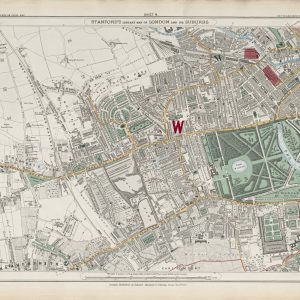
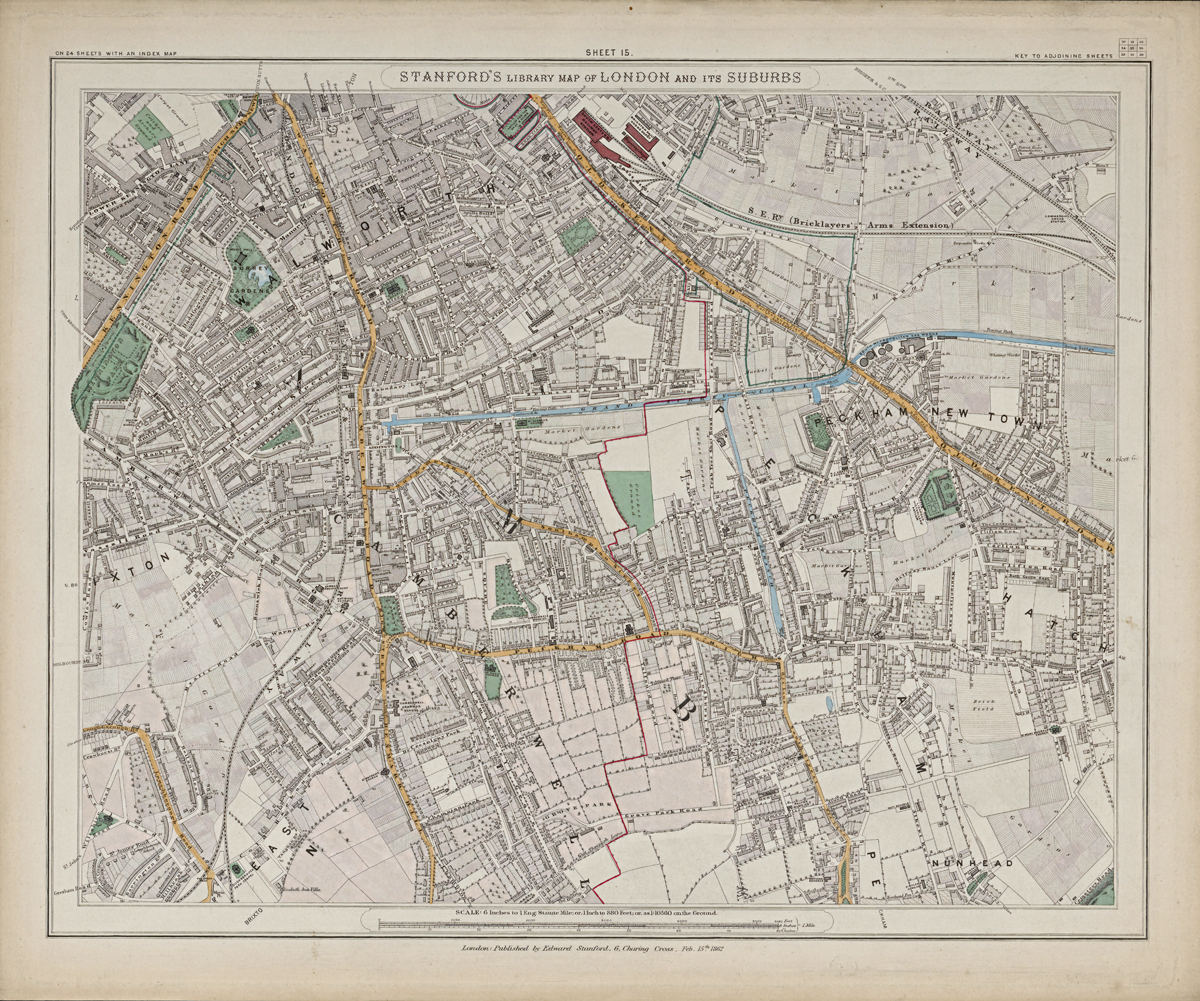
The Old London Map Company are pleased to offer this fine art reproduction sympathetically enhanced and digitalised from the original to a standard equalling museum quality. This map was originally published by Edward Stanford in 1872. Like the other sheets in the series, it originally formed part of a 24-sheet large-scale map depicting London and its surroundings during the late Victorian era. Now produced in individual editions so you can enjoy a finished piece featuring the particular area of interest within Victorian London.
Overview
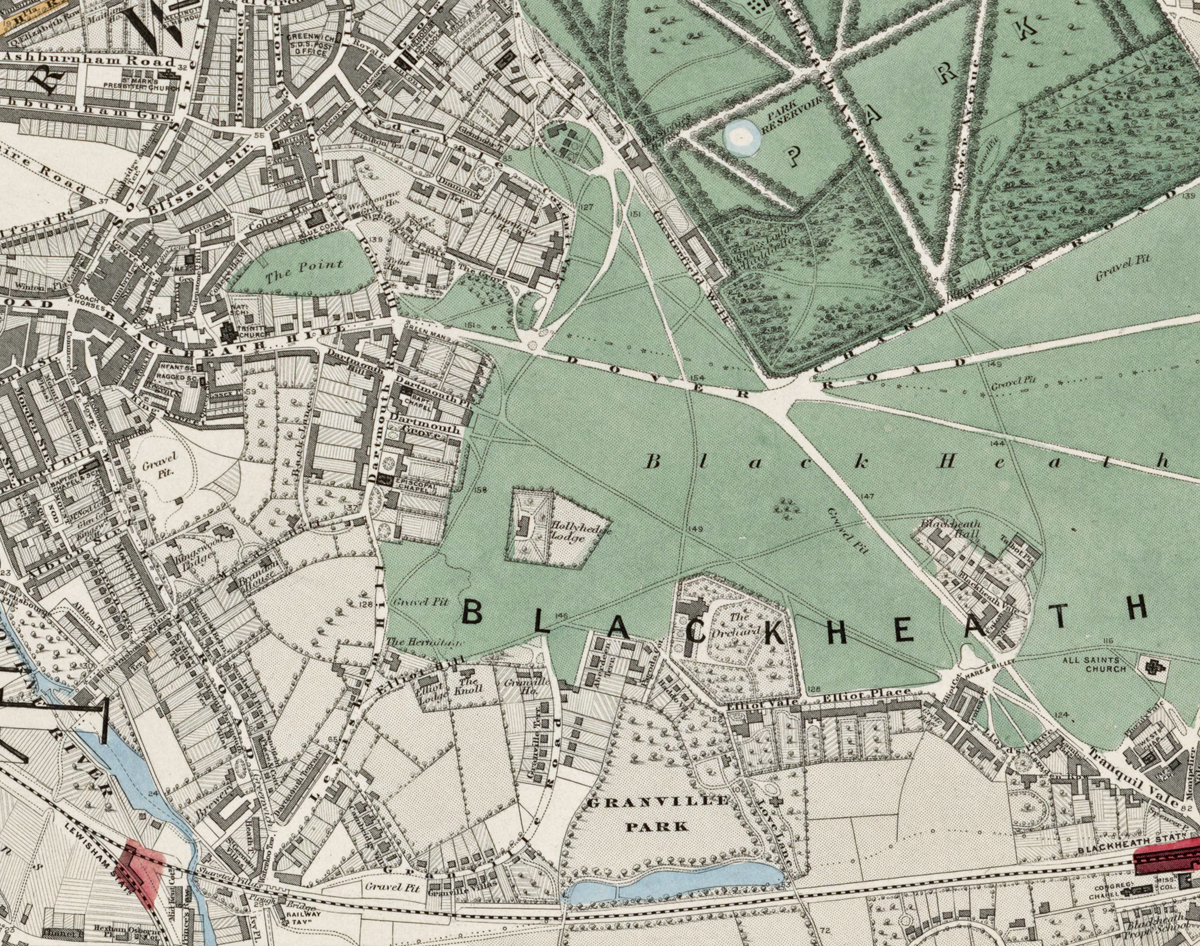
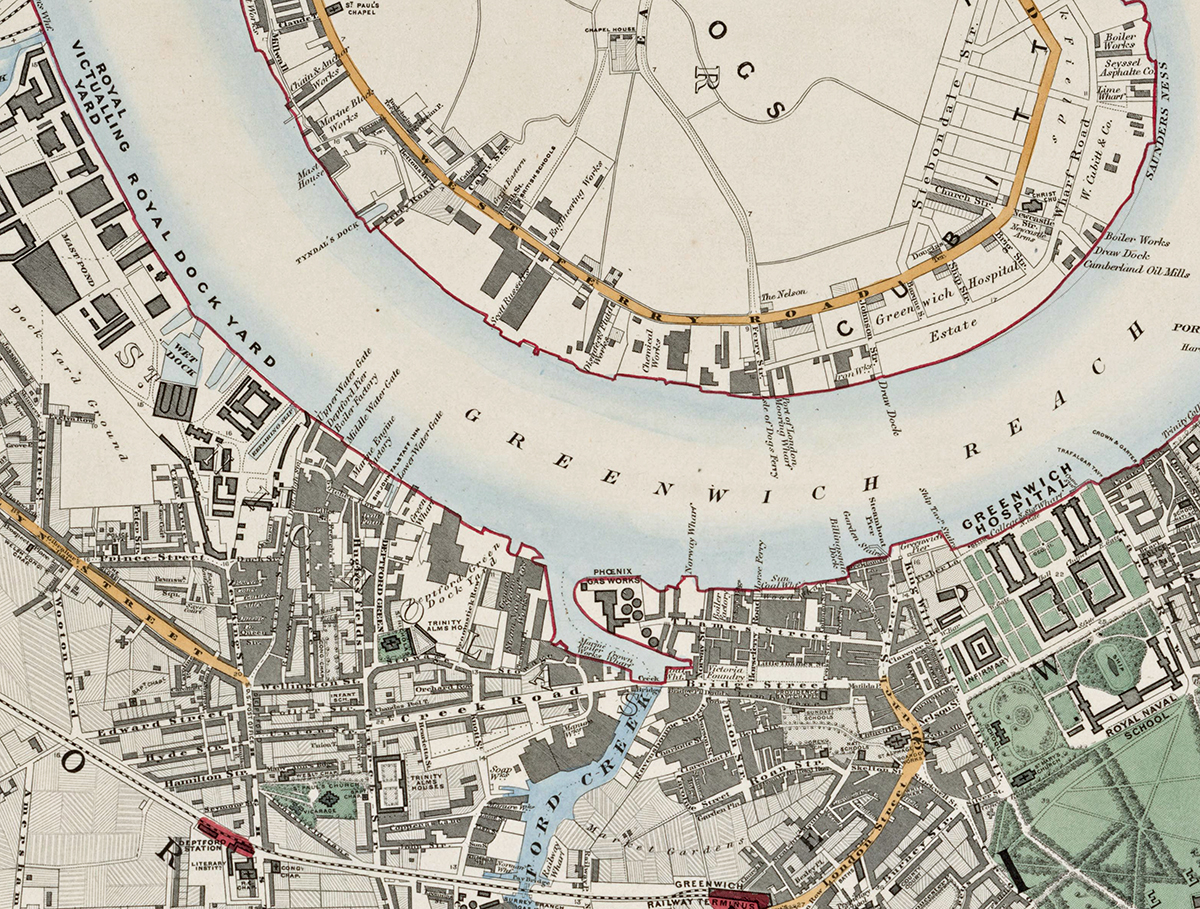
Sheet 16 captures the area around Greenwich, Deptford, and Blackheath on the southern bank of the River Thames. The map shows the bustling maritime centre of Greenwich, the naval and industrial districts of Deptford, and the open heathland of Blackheath. It highlights the mixture of royal heritage, working docks, and suburban growth characteristic of this part of south-east London in the early 1870s.
Cartographic Details
- High-quality engraved line work with hand colouring typical of Stanford’s maps.
• Greenwich Park and Blackheath are shaded in green with detailed paths and landscaping.
• The Thames, its wharves, and the Royal Naval Dockyard at Deptford are clearly marked.
Administrative and Postal Features
- The sheet lies primarily within the South Eastern (SE) postal district introduced during mid-19th-century reforms.
• Red boundary lines indicate parish and district divisions as they existed before the creation of modern London boroughs.
Original Size
The complete Stanford’s Library Map measured about 9 × 12 feet (approximately 2.7 × 3.7 m) when all 24 sheets were assembled. Each individual sheet, including Sheet 1, was printed on paper roughly 18 × 24 inches (about 46 × 61 cm) which we supply as our Medium size but due to the quality of our scanning process we are also able to offer a larger edition at 24 x 29 inches (about 61 × 73.5 cm) printed on conservation grade paper.
Modern Postcode Coverage
Today, this part of south-east London is covered by several modern Royal Mail postcode districts:
• SE5 – Camberwell
• SE15 – Peckham, Nunhead
• SE14 – New Cross
• SE4 – Brockley (eastern edge)
• SE22 – East Dulwich (western margin)
• SE1 – Bermondsey (north-west fringe)
Twenty Major Places Shown on the Map
Notable locations visible include:
1. Peckham Rye Common
2. Nunhead Cemetery
3. Camberwell Green
4. New Cross Station
5. Bricklayers’ Arms Goods Depot
6. South London Botanical Gardens (Camberwell)
7. St Giles’ Church, Camberwell
8. St Mary Magdalene Church, Peckham
9. Peckham High Street Market area
10. Queen’s Road Station (Peckham)
11. Peckham Rye Station
12. Surrey Canal (Grand Surrey Canal)
13. Deptford New Town (northern edge)
14. Telegraph Hill
15. Brockley Cemetery (edge of sheet)
16. Old Kent Road (northern border landmarks)
17. Goldsmiths’ College (future site marked as New Cross area)
18. Haberdashers’ Aske’s School grounds
19. Goose Green (western corner)
20. Rye Lane commercial district
Twenty Major Roads and Thoroughfares Shown
Prominent streets and routes include:
1. Old Kent Road
2. Queens Road
3. Peckham High Street
4. Rye Lane
5. Camberwell New Road
6. Camberwell Church Street
7. Denmark Hill (western edge)
8. Southampton Way
9. Nunhead Lane
10. Peckham Rye East and West
11. Evelina Road
12. Brockley Road (eastern edge)
13. New Cross Road
14. Telegraph Hill Road
15. Albany Road
16. Consort Road
17. Lyndhurst Way
18. Bellenden Road
19. Peckham Park Road
20. Commercial Way
In summary, Sheet 16 provides a detailed portrayal of Greenwich and its surroundings at the height of the Victorian era, capturing royal landmarks, thriving dockyards, and the broad heathlands that continue to define the district today.